No user accounts required for your recipients -
Start your 7-day free trial now!

How universities can roll out a unified digital badge and certificate program across departments, from pilot to full adoption.



Most universities already issue some form of digital credential, whether it is a continuing education certificate, a workshop completion badge, or a professional development record. The problem is that these efforts usually happen in silos. The business school runs its own program, the IT department uses a different tool, and career services has yet another process. The result is an inconsistent experience for students and a missed opportunity for the institution.
A campus-wide badge strategy creates one coherent credentialing framework. The key benefits for universities include:
Universities that treat digital badges as an institutional initiative rather than a departmental experiment position themselves as forward-thinking partners for both students and employers.
Rolling out badges across an entire university at once is neither realistic nor advisable. The smarter approach is to start with one department that has clear conditions for success, then expand based on what you learn.
Good candidates for a pilot include:
When choosing your pilot department, look for these success indicators:
Early wins from a successful pilot, such as higher sharing rates on LinkedIn or positive student feedback, create the internal momentum you need to convince other faculties.
Once the pilot proves the concept, the next challenge is scaling without losing consistency. This is where a clear badge framework becomes essential.
A strong framework should cover:
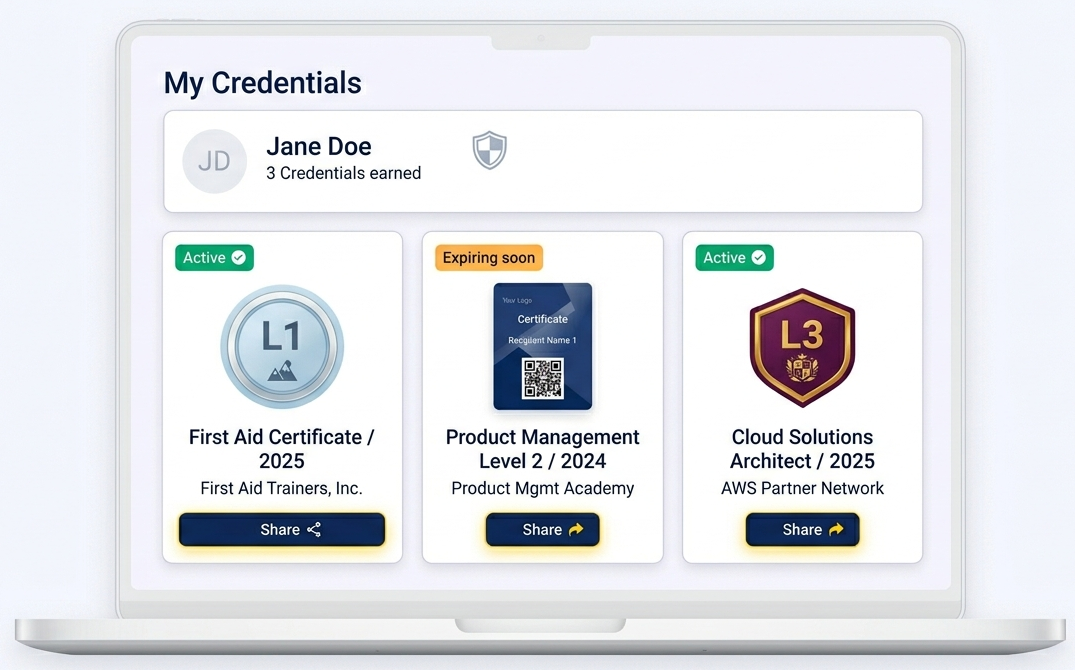
With Virtualbadge.io, universities can set up templates and manage all credentials from a central dashboard while still giving individual departments the autonomy to issue badges for their own programs. This balance between central control and local flexibility is what makes campus-wide adoption realistic.
For more information, read: The Complete Overview of Digital Certificates and Badges
A badge strategy only works if it fits naturally into the systems students and administrators already use. The most important integration points are:

For more information, read: Why Your LMS Needs Digital Badge Integration in 2026
A campus-wide badge strategy does not have to be overwhelming. The path forward is clear:
Virtualbadge.io helps universities issue, manage, and track verifiable digital badges and certificates at scale. From LMS integration to LinkedIn sharing and bulk issuance via CSV, everything is built for institutions that need a professional, scalable solution.
Book a free demo to see how a campus-wide badge program could work at your university.
* You can find the organisation ID in the URL when you access your LinkedIn Company page as an admin.


Marketing

Jun 23, 2026

4 min
A note on how we write: we use AI tools to help with research and drafting. Every article is then reviewed, edited and fact-checked by someone on the Virtualbadge.io team before it goes live. The final word is always human.

Use Virtualbadge.io to design and send digital certificates that create trust - in less than 10 minutes.
%20(1).svg)