No user accounts required for your recipients -
Start your 7-day free trial now!

How examination organizations connect results directly with automated, secure certificate issuance.


Every time someone passes your exam, a race against time begins. Learners want to share their success on LinkedIn immediately, multi day waiting periods feel outdated today. Virtualbadge.io enables examination organizations to issue digital badges automatically and securely, directly after passing. This article shows how such a workflow works and how you can set it up.
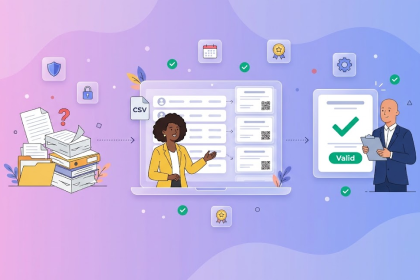
Automated badge issuance describes a workflow in which passing an exam directly triggers the creation and delivery of a verifiable digital certificate. As soon as your exam system registers a successful result, the badge is created, personalized, and sent. The time consuming intermediate step is eliminated, no one has to fill out templates, export PDFs, or send emails individually anymore.
The pressure on examination organizations is growing. Learners expect their credentials immediately, while requirements for verifiability and fraud protection keep rising. Manual issuance ties up working time for repetitive tasks, errors in names or exam titles occur easily and have to be corrected with considerable effort. Delays frustrate participants and leave a negative impression.
Automation scales with your exam volume, ensures consistent quality, and frees your team for more important tasks.
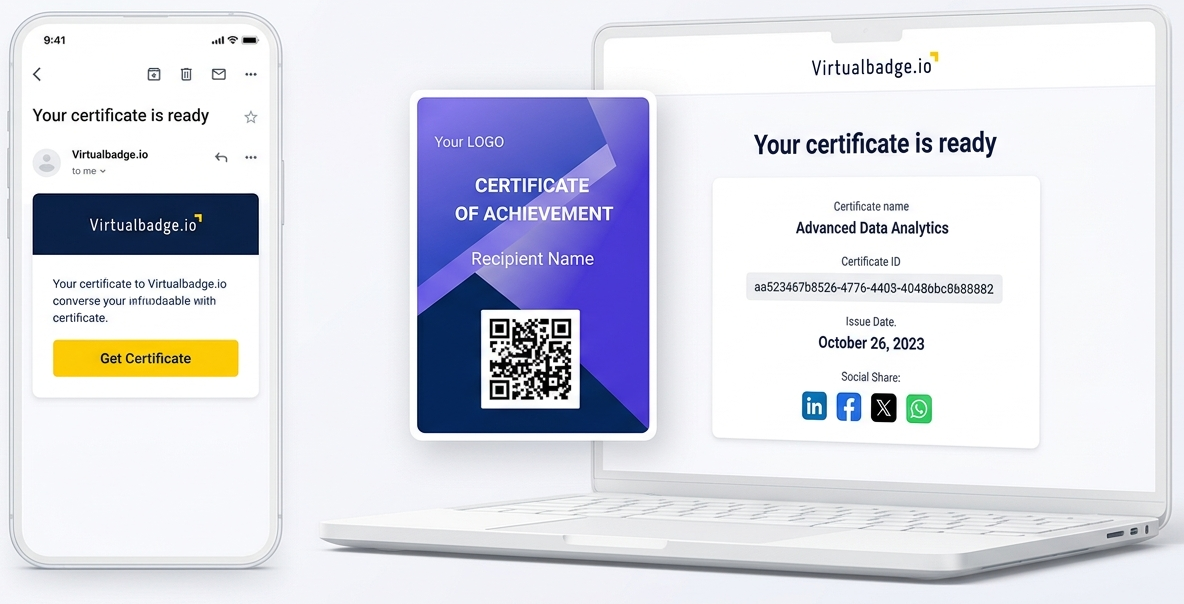
A good workflow follows a clear sequence. Your exam system registers the result, transfers data such as name, exam, and date to the badge platform, the system generates the badge with embedded metadata, and the person receives their certificate by email, including a verification link and a wallet option. The result: certificates in minutes instead of days.
The technical connection depends on your infrastructure:
A digital badge is more than an image file. It contains information about the issuer, the achievement, the award criteria, and the issue date, cryptographically secured and tamper proof. A QR code links to a verification page where anyone can check its authenticity, which strengthens trust in your examination program.
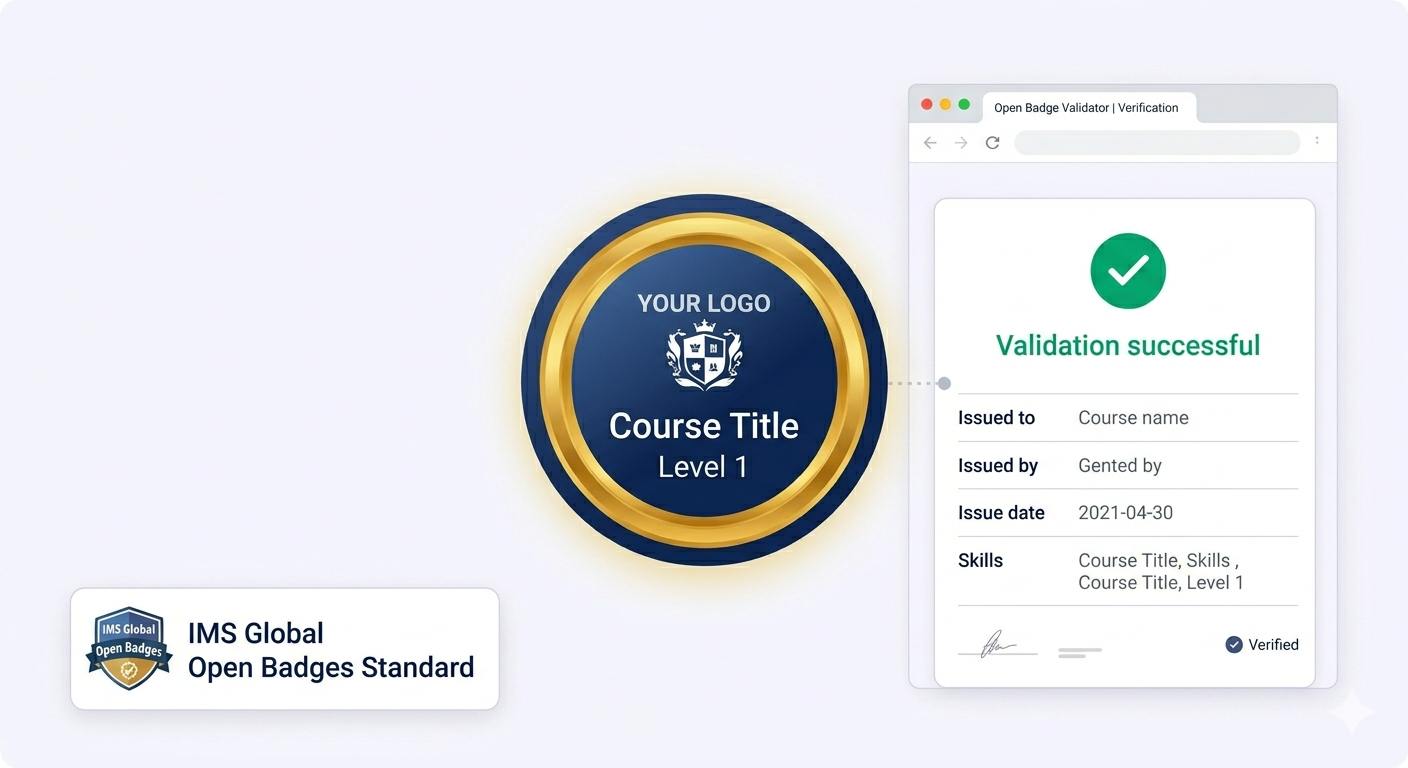
All data is stored on European servers, in compliance with GDPR. Metadata is encrypted, and participants decide for themselves who they share their certificate with. Virtualbadge.io issues fraud proof certificates that can also meet regulatory standards such as W3C VC 2.0 and eIDAS.
For your organization, automation means time savings, fewer errors, and more visibility, shared badges on LinkedIn act as a recommendation signal to a professional network. For participants, it means faster recognition, instant sharing on LinkedIn, and storage in Apple or Google Wallet for quick access, even offline.
Setting this up does not require an extensive IT project. Start by documenting your current process: How long does it take today from the exam to the certificate, where do delays occur, what data is needed? This analysis shows where automation has the greatest impact.
Next, choose the right integration method, API, Zapier, or CSV upload, based on your technical infrastructure. With Virtualbadge.io, a professional workflow can be set up and tested within a few days.
For more information: How to Set Up an Assessment-to-Certificate Workflow for Exam and Test Providers
Automated badge issuance after exams is no longer a topic for the future. Organizations that take this step save time, reduce errors, and strengthen trust in their credentials. For participants, it means faster recognition and better visibility of their achievements.
See for yourself how simple automated certification can be: Schedule a Free Demo
What is the difference between automated issuance and manual certificate issuance? With manual issuance, your team creates every certificate individually. An automated workflow connects the exam system and badge platform directly, so the certificate is created without manual intervention.
What technical requirements does my organization need? That depends on the approach you choose. API integration requires development resources, Zapier works without any programming knowledge, and CSV upload only requires an exportable results list.
How long does setting up an automated workflow take? With Zapier or CSV upload, you can get started within a few hours. An API integration takes anywhere from a few days to a few weeks, depending on complexity.
Are automatically issued badges just as secure as manual certificates? They are actually more secure, since cryptographically secured metadata and a verification link make manipulation harder, unlike traditional PDF certificates.
* You can find the organisation ID in the URL when you access your LinkedIn Company page as an admin.


Marketing

Jul 8, 2026

5 min
A note on how we write: we use AI tools to help with research and drafting. Every article is then reviewed, edited and fact-checked by someone on the Virtualbadge.io team before it goes live. The final word is always human.

Use Virtualbadge.io to design and send digital certificates that create trust - in less than 10 minutes.
%20(1).svg)