No user accounts required for your recipients -
Start your 7-day free trial now!

What data protection, security, and standards requirements apply when digital badges are issued automatically after a passed exam


A digital badge stores structured metadata: issuer, recipient, exam title, completion date, and often a validity period. If this information makes a person identifiable, it counts as personal data under the GDPR. Automatically sending a badge after a passed exam is therefore a form of data processing that requires a legal basis. In practice, three options are the most relevant:
When badges are sent manually, these questions often go unanswered. An automated process forces you to define the rules properly once and disclose them in your privacy policy.
For more information, read: How to Issue Digital Certificates Securely and Compliantly
Under the GDPR, you may only process the data that the purpose actually requires. For an exam badge, the following information is usually sufficient:
In Virtualbadge.io, you decide in the template which fields appear on the credential. This puts data minimization into practice right at the point of issuance.
Integrity is just as important. A badge that can easily be copied or altered is of no use to employers or authorities. In Virtualbadge.io, you can cryptographically sign your credentials and add a QR code that links to a validation page.
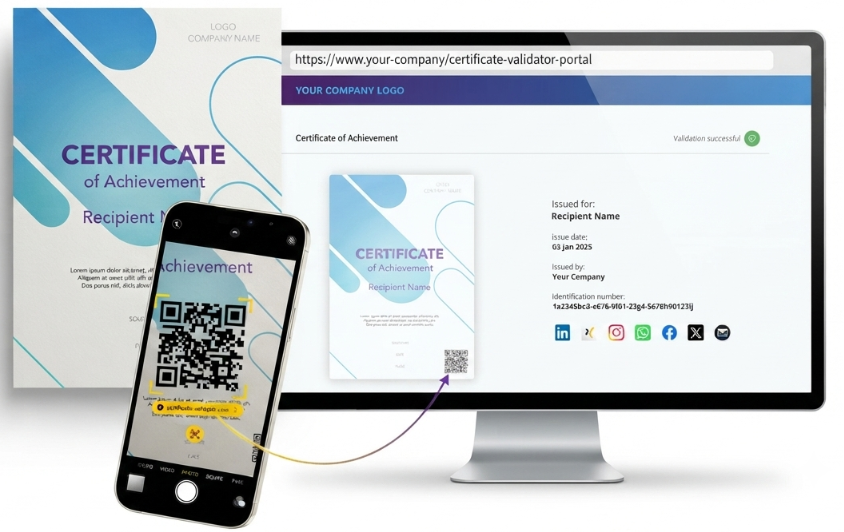
If a signed data field is changed afterward, the verification fails. Third parties can check authenticity in seconds, without contacting the issuer. You can find more details on the page about validation pages.
Automation speeds up issuance, but it does not govern the rest of the credential lifecycle. Three points need to be clearly defined:
With Virtualbadge.io, you manage all issued badges and certificates in one place and set expiration dates directly on the credential. Anyone who checks a credential can see on the validation page whether it is still valid. All data is stored on European servers.
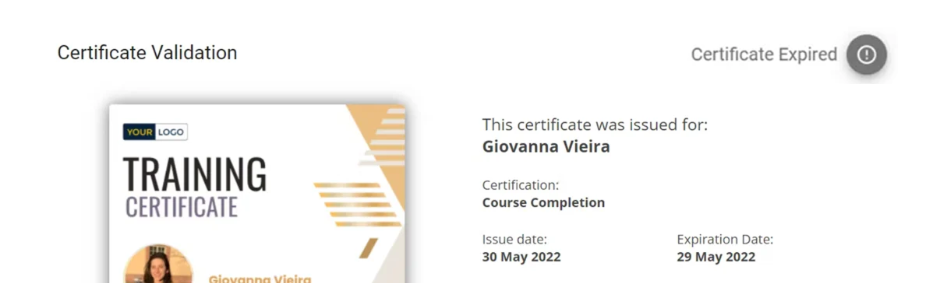
The Open Badges standard from 1EdTech defines a uniform, machine-readable format for digital credentials. This keeps badges verifiable across platforms.
Under the eIDAS 2.0 regulation, every EU member state must offer an EU Digital Identity Wallet by the end of 2026, and from the end of 2027, regulated entities such as banks must accept it. Credentials based on verifiable standards are much easier to integrate into this environment. Virtualbadge.io issues Open Badges, uses W3C Verifiable Credentials, and has signed the Bitkom EUDI Wallet Memorandum of Understanding.
Automatically issued badges save time and reduce errors. Compliance does not slow down this advantage, as long as data protection, tamper-proof security, and standards are built into the workflow from the start. For certification and examination organizations in particular, this means meeting today’s requirements while preparing for eIDAS 2.0 at the same time.
Would you like to see this in your exam process? Book your free demo now.
How does an automatically issued badge become tamper-proof?
Through a cryptographic signature and a validation page accessed via QR code. Any later change to the signed data is detected during verification.
What does eIDAS 2.0 mean for badge issuance?
With the EUDI Wallet, verifiable, machine-readable credentials are becoming more important. Organizations that rely on Open Badges and W3C Verifiable Credentials today avoid having to switch later.
* You can find the organisation ID in the URL when you access your LinkedIn Company page as an admin.


Marketing

Oct 12, 2026

5 min
A note on how we write: we use AI tools to help with research and drafting. Every article is then reviewed, edited and fact-checked by someone on the Virtualbadge.io team before it goes live. The final word is always human.

Use Virtualbadge.io to design and send digital certificates that create trust - in less than 10 minutes.
%20(1).svg)