No user accounts required for your recipients -
Start your 7-day free trial now!

How universities connect course completion and exam results directly to the issuance of verified digital certificates.


On Friday evening, 800 participants complete an online course. By Monday morning, still no one has a certificate in hand, because the administration creates each document individually in Word, checks names, and sends emails manually. This costs time, produces errors, and leaves participants waiting who actually need their credential right away. If issuance is tied to the learning management system instead, course completion and exam data generate the certificate automatically.
With 30 participants, manual work is barely noticeable. But once a university supports hundreds or thousands of participants per semester, every single document becomes a burden. Typical consequences include:
Printed certificates also cause material and shipping costs, and a simple PDF without validation can be copied or altered at will.
Automation reverses this process. The learning management system provides the trigger as soon as someone meets the defined criteria, such as course completion, minimum attendance, or a passed exam. The certificate platform takes over the data, personalizes the template, and sends the document. The examination office and course administration define the rules once, after which every participant receives their credential under the same conditions, whether 50 or 5,000 people are enrolled in the course.
Which integration path fits depends mainly on the university's IT resources. Three options have proven effective:
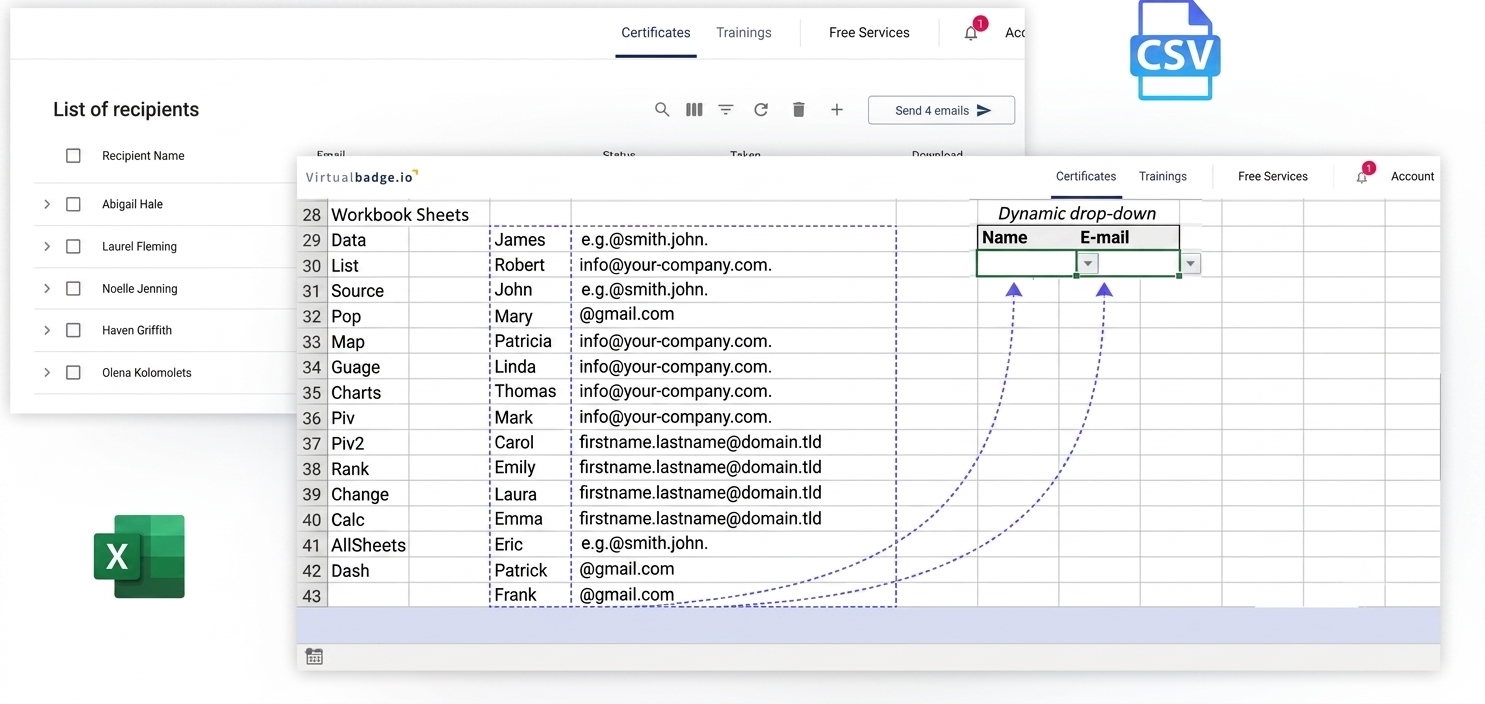
For the exam connection, the following applies: If exams are set up directly in the LMS, the completion trigger can take the result into account at the same time. External campus management systems are connected via API or automated data export. Clear issuance rules are decisive. Which grade triggers a certificate, and how are exam retakes or late registrations handled? Once defined, these rules apply to every exam. The use case on LMS and ERP automation on Virtualbadge.io shows what this looks like in practice.
A clean rollout does not start with technology, but with alignment between the examination office, IT, quality management, and program management. A clear roadmap follows:
It also helps to inform participants in advance when their certificate will arrive and how to share it on LinkedIn. The dashboard then shows how many credentials were opened, downloaded, and shared.
An automatically issued certificate is only worth as much as its verifiability. Virtualbadge.io combines several building blocks for this:
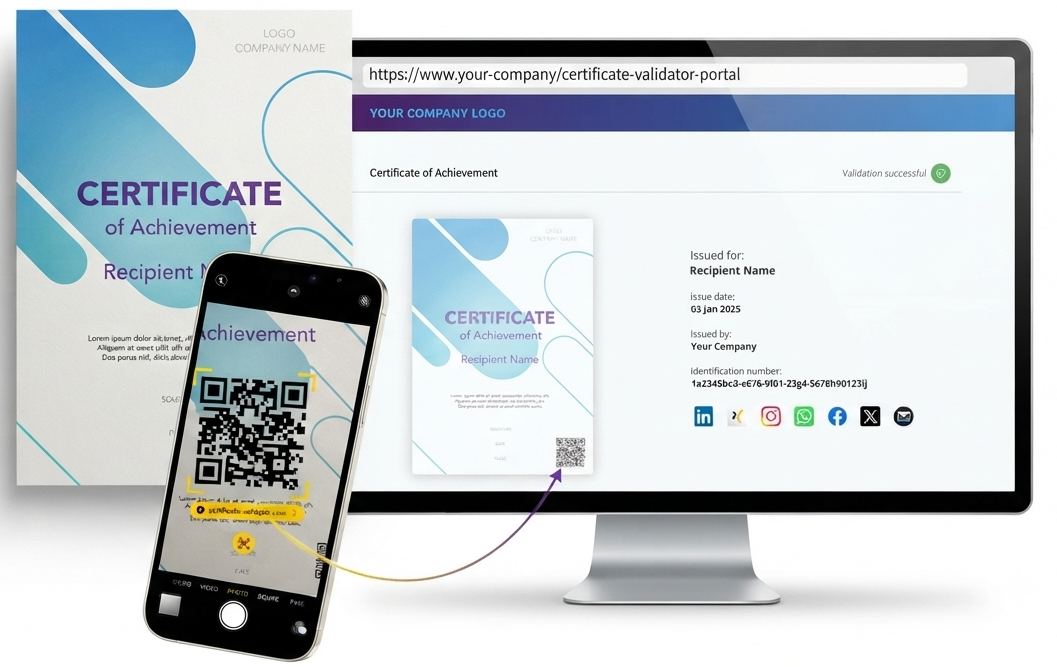
On top of this comes the Open Badges standard. The current version from 1EdTech builds on the W3C Verifiable Credentials Data Model 2.0, which has been an official W3C standard since May 2025. For universities, this means that metadata on the issuer, competency, and award criteria remains readable across platforms, so other institutions and employers can verify the credentials directly. According to the Credential Engine report "Counting Credentials in Context 2025", the number of digital credentials is growing strongly, which makes standardized, verifiable formats all the more important.
For more information, read: Open Badges vs Verifiable Credentials: Key Differences
Virtualbadge.io connects your university LMS and your exam administration via API, Zapier, or CSV to a GDPR-compliant certificate platform. Templates, issuance rules, signature, delivery, and validation run in one system, without you having to replace your existing LMS.
Start with a brief assessment: Where is your participant data stored, which triggers should generate a certificate, and which certificate types do you need?
In a free demo, we will show you how to turn this into an automated workflow for your university.
Which LMS can be connected?
In principle, any learning management system that provides data via API, Zapier, or CSV export.
How do employers verify the authenticity of a certificate?
Via the QR code on the certificate, they reach the validation page, which confirms the issuer, content, and status, entirely without a user account.
Is automated issuance GDPR-compliant?
Yes. Virtualbadge.io stores all data on EU servers and transmits it in encrypted form, which facilitates use at European universities.
* You can find the organisation ID in the URL when you access your LinkedIn Company page as an admin.


Marketing

Oct 29, 2026

5 min
A note on how we write: we use AI tools to help with research and drafting. Every article is then reviewed, edited and fact-checked by someone on the Virtualbadge.io team before it goes live. The final word is always human.

Use Virtualbadge.io to design and send digital certificates that create trust - in less than 10 minutes.