No user accounts required for your recipients -
Start your 7-day free trial now!

How universities use a rule-based workflow to issue verifiable certificates immediately after course completion.


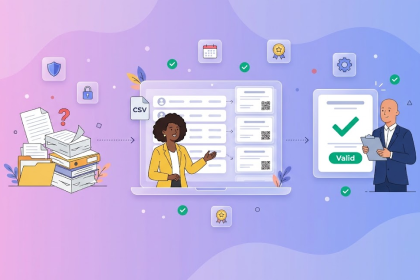
Do you still create university certificates manually in Word or send them individually as PDFs after course completion? With several hundred participants per semester, this quickly becomes error-prone and time-consuming. A rule-based workflow shifts the creation, personalization, and delivery of digital certificates directly to your examination system.
A passed exam result automatically triggers the creation and delivery of a digital certificate. A trigger event in the examination system starts the workflow, the template is filled with the individual data, and the certificate is delivered by email or via a personal download page.
Universities benefit especially, because exam volumes fluctuate strongly by season. In these phases, manual creation costs time that administrative teams simply do not have: every certificate has to be created and checked individually, and typos in names or course data occur regularly. Anyone who waits weeks for their credential cannot use it in time for job applications or LinkedIn, which also harms the university's visibility.
Universities process personal data of students, so every platform must comply with the GDPR: EU data hosting, data processing agreements, and clear retention periods are among the basic requirements.
A certificate is only worth something if its authenticity can be verified. Digital signatures and QR code verification protect against tampering, while a simple PDF document does not offer this protection.
%201.png)
Other key criteria:
Three ways connect your examination system and certificate platform with your university:
Implementation takes just a few steps. Design a certificate template in your corporate design with dynamic fields for name, course title, and completion date, define a trigger rule, and connect your data source. Then test the workflow with a small group before you go live.
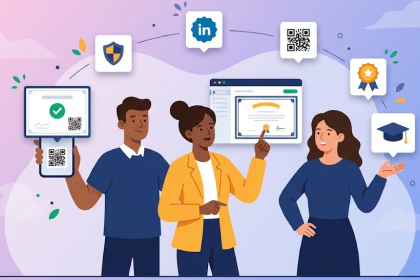
Open Badges embed verifiable metadata such as issuer, recipient, and criteria directly into the certificate file. Supplemented by the W3C Verifiable Credentials data model, credentials are additionally cryptographically signed and wallet-ready. Employers verify authenticity with a QR code scan, without having to ask the university.
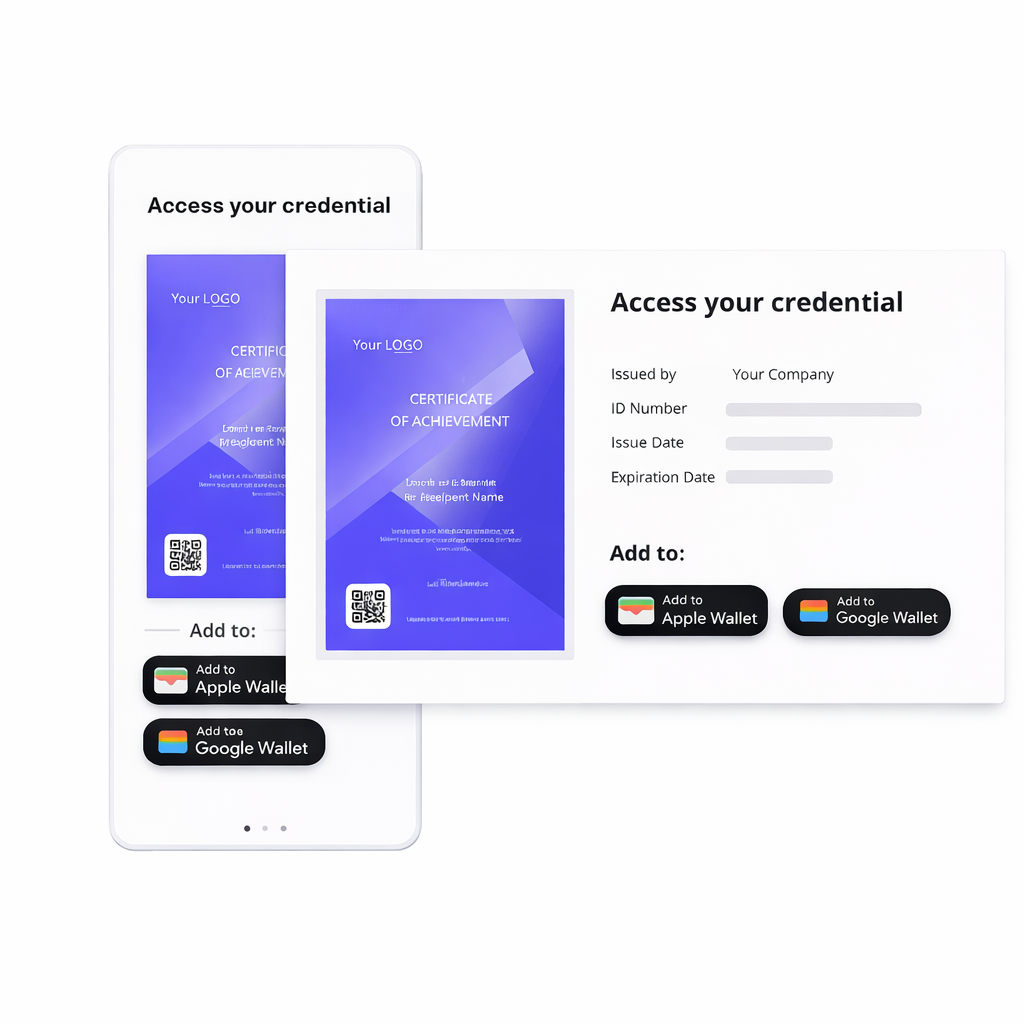
Micro-credentials certify individual modules, workshops, or certificate courses below the level of a full degree program. Only automated issuance makes them scalable: with fifty modules instead of five, the administrative effort stays the same. Participants receive their credential immediately after completion, share it on LinkedIn with a single click, or save it in Apple Wallet and Google Wallet, which organically increases the university's reach.
Lisbon Digital School digitized and automated its certificate issuance in this way, as described in the success story.
For more information, read: W3C VC Standard: The Future of Verifiable Digital Credentials
Manual certificate processes are no longer a viable foundation for universities that want to scale continuing education and micro-credentials. Virtualbadge.io connects examination systems via API, no-code automation, or CSV upload to the automated issuance of tamper-proof digital certificates, GDPR-compliant and with a dedicated verification page on your domain.
Book a free demo and see how your examination administration can be automated today.
Can an existing learning management system be connected?
Yes, via no-code automation, direct API integration, or CSV export. Virtualbadge.io supports all three ways, even without programming skills.
Are digital certificates legally recognized?
Yes, credentials based on the Open Badges standard are internationally recognized. Embedded metadata enables automatic verification by employers and authorities.
Can certificates that were already issued be digitized retroactively?
Yes, with a CSV upload, completed courses can also be added retroactively. Each entry receives an individual digital certificate with QR code verification.
What does implementation cost?
The costs depend on the number of certificates issued. Virtualbadge.io offers a seven-day free trial in which you can evaluate the entire workflow with your own data.
* You can find the organisation ID in the URL when you access your LinkedIn Company page as an admin.


Marketing

Oct 6, 2026

5 min
A note on how we write: we use AI tools to help with research and drafting. Every article is then reviewed, edited and fact-checked by someone on the Virtualbadge.io team before it goes live. The final word is always human.

Use Virtualbadge.io to design and send digital certificates that create trust - in less than 10 minutes.
%20(1).svg)