No user accounts required for your recipients -
Start your 7-day free trial now!

Learn how gamification principles and digital badges work together to motivate learners, increase course completion, and turn training into a rewarding experience.


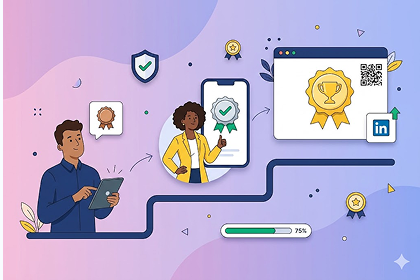
Gamification applies game-like mechanics to non-game contexts, and education is one of the areas where it has the strongest impact. When learners earn visible rewards for reaching milestones, their motivation shifts from external pressure to intrinsic drive. Progress becomes tangible, and completing a course feels like an achievement rather than an obligation.
Digital badges are a natural fit for this approach. Each badge represents a specific skill or accomplishment, giving learners a clear target to work toward. Unlike abstract grades or certificates handed out only at the end, badges can mark progress along the way. A learner completing the first module of a safety training, for example, receives immediate recognition, which reinforces their commitment to continue.
This combination of clear goals, visible progress, and meaningful rewards is what makes gamification effective. It taps into the same psychological principles that make games engaging: autonomy, competence, and a sense of accomplishment.
Several proven gamification mechanics translate directly into a badge-based system:
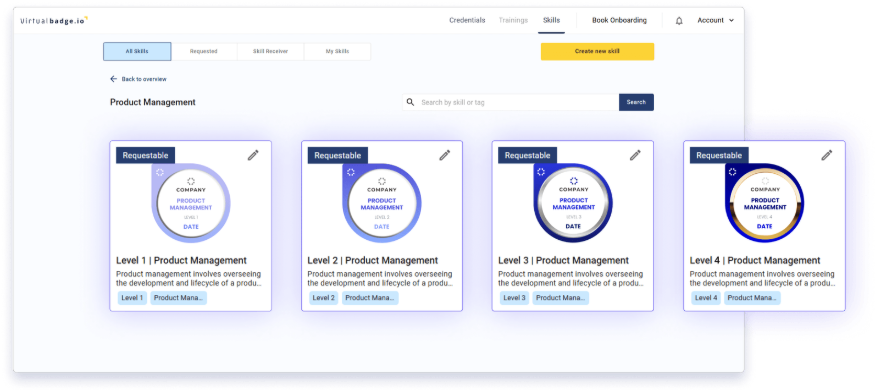
The key is to connect every badge to a meaningful learning outcome. Badges that feel arbitrary or too easy to earn lose their motivational power quickly.
Setting up a gamified badge program does not require a complete redesign of your training. Start with these practical steps:
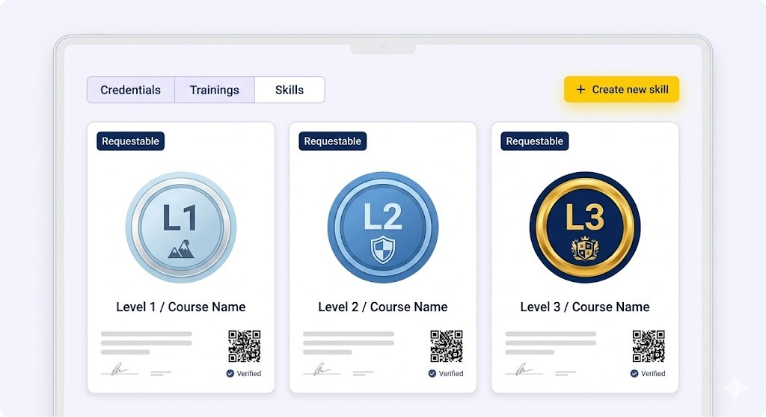
Starting small works well. Many training providers launch with three to five badges for their most popular course and expand from there based on learner feedback.
A few principles separate successful gamification programs from ones that fall flat:
The company 4flow built a structured badge program to recognize internal skills across their teams. Read how they did it in their success story.
Building a gamified badge system is easier than it sounds, especially with the right platform. Virtualbadge.io lets you design professional badges, define earning criteria, and issue credentials individually or in bulk via CSV upload. Learners receive their badges instantly, can add them to Apple and Google Wallet, and share them directly on LinkedIn.
Ready to bring gamification to your training program? Book a free demo and see how Virtualbadge.io helps you motivate learners step by step.
* You can find the organisation ID in the URL when you access your LinkedIn Company page as an admin.


Marketing

Jun 16, 2026

5 min
A note on how we write: we use AI tools to help with research and drafting. Every article is then reviewed, edited and fact-checked by someone on the Virtualbadge.io team before it goes live. The final word is always human.

Use Virtualbadge.io to design and send digital certificates that create trust - in less than 10 minutes.
%20(1).svg)