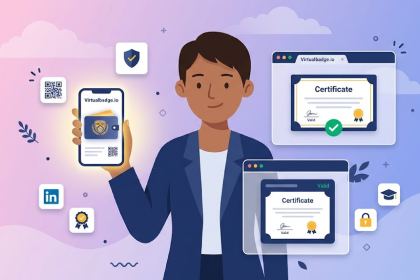
No user accounts required for your recipients -
Start your 7-day free trial now!

Why detailed, structured credentials close the gap between course completion and actual competence, and how HR departments and dual study universities benefit.


A completion certificate confirms that someone has successfully finished a program. Which specific skills were acquired in the process usually remains unclear. HR managers first have to find out during the interview what is actually behind the title, which costs time and leads to misjudgments.
Especially in dual study programs, where theory and practical training are closely interwoven, valuable competency details get lost. Traditional paper certificates provide no basis for this. HR systems cannot evaluate them automatically, and employers have to blindly trust the issuing institution.
A complete competency certificate includes more than just a name and completion date. It documents specific learning outcomes, the competency level achieved, and the scope of the learning activity. This should include at least:
These structured metadata enable HR systems to automatically capture qualifications and match them against job requirements. The European Digital Credentials for Learning also rely on this approach.
In dual study programs, students acquire competencies both at the university and in the company. A single completion certificate hides this diversity. Detailed digital badges for individual modules, on the other hand, make every learning step visible, can be shared on LinkedIn, and link back to the issuing university with every interaction.
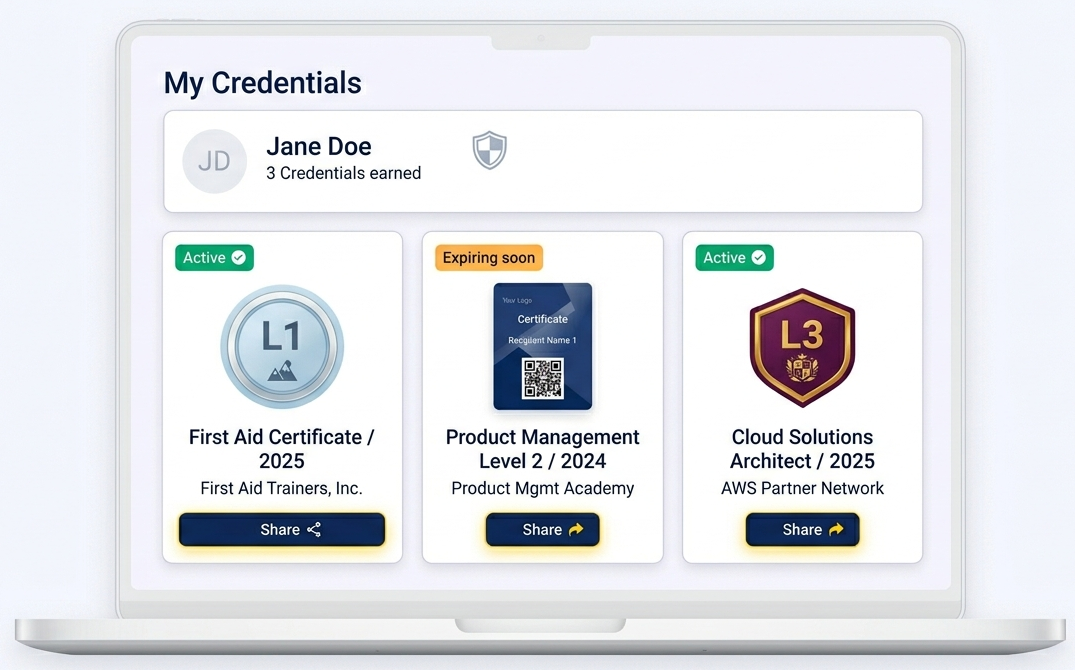
For HR departments, fast verifiability matters most. Key requirements from an HR perspective:
Logistics provider 4flow uses exactly this approach to make internal competencies visible, as described in the 4flow success story.
For competency credentials to be recognized across Europe, they must comply with established standards. Open Badge 2.0 and 3.0 ensure interoperability and shareability on social platforms, while W3C Verifiable Credentials 2.0 ensures cryptographically signed, tamper-proof credentials.
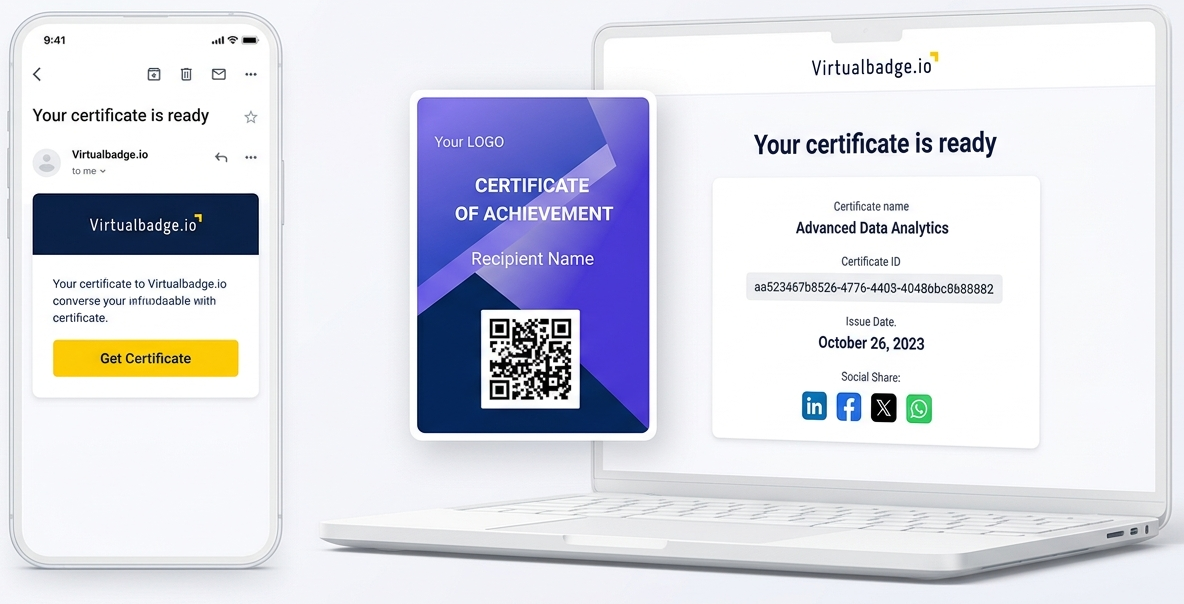
From 2027, regulated sectors in the EU will be required to accept the EUDI Wallet, through which citizens can share verifiable qualification credentials with employers and authorities. Educational institutions that continue to rely solely on PDF certificates will hardly be able to meet these requirements. The transition to standardized, cryptographically signed credentials can be designed step by step, for example through a pilot project with individual programs.
For more information on the EU Identity Wallet, read: EUDI Wallet Memorandum of Understanding
Virtualbadge.io helps educational institutions and companies issue granular, verifiable competency certificates. Employers verify authenticity via QR code or verification link within seconds, while issuance itself runs automatically via API or CSV import.
Test how easily complete competency information can be integrated into your existing processes. Schedule your free demo now
What are complete competency information in digital certificates?
They specifically describe which skills someone has acquired: learning outcomes, competency levels, accreditation details, and validity periods. This data is machine readable and can be automatically evaluated by HR systems.
Why are complete competency credentials relevant for HR departments?
They save time when verifying qualifications. Virtualbadge.io enables verification via QR code within seconds, and structured metadata can be imported directly into applicant tracking systems.
How do dual study universities benefit from granular competency certificates?
They can issue separate badges for each module. Students share these on LinkedIn, which strengthens the university's brand and gives practice partners a clear picture of actual competencies.
How quickly can the issuance of complete competency certificates be implemented?
With Virtualbadge.io, educational institutions and companies can get started within a few days. The platform integrates into existing processes via API or CSV import, and a pilot project with a single program provides initial experience without a major upfront investment.
* You can find the organisation ID in the URL when you access your LinkedIn Company page as an admin.


Marketing

Sep 24, 2026

5 min
A note on how we write: we use AI tools to help with research and drafting. Every article is then reviewed, edited and fact-checked by someone on the Virtualbadge.io team before it goes live. The final word is always human.

Use Virtualbadge.io to design and send digital certificates that create trust - in less than 10 minutes.
%20(1).svg)