No user accounts required for your recipients -
Start your 7-day free trial now!

An overview of hidden paper costs, implementation effort, and Virtualbadge.io's pricing plans



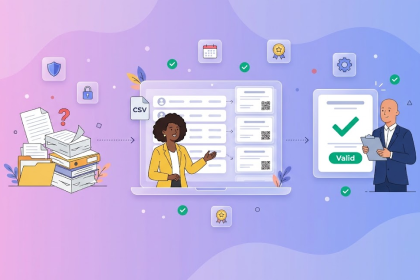
Paper certificates may look inexpensive at first glance, but the actual expenses add up quickly. Beyond printing, high-quality paper, and shipping, the biggest effort often happens behind the scenes: manual data entry, quality control, and handling replacement requests for lost or damaged documents.
On top of that comes a growing risk of fraud. Paper-based processes offer few reliable mechanisms for detecting such forgeries early, and every review by an expert costs additional time and money. With several thousand graduates per year, these efforts add up to a significant, often underestimated cost block that rarely shows up in traditional budget calculations.
Switching to digital certificates requires a one-time implementation phase: designing templates, migrating data, and setting up integrations with existing systems. With a no-code-capable platform, this step is possible without deep technical expertise and usually within a few days. The bulk import of existing graduate data via CSV file can also be carried out without an IT project, which saves a lot of manual work, especially for larger graduating classes.
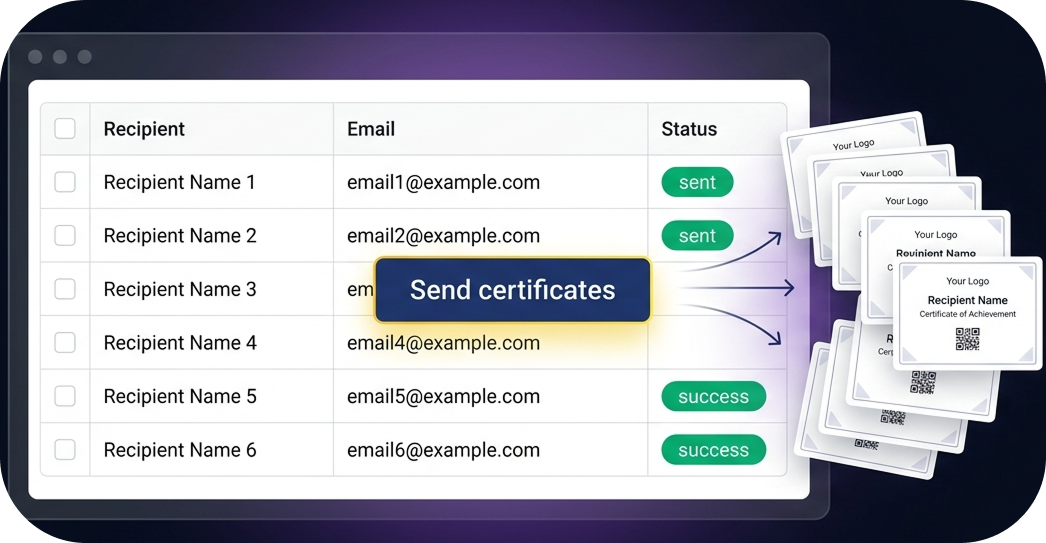
In ongoing operations, printing, shipping, and storage costs disappear entirely. Certificates are stored in the cloud, so graduates can access them themselves at any time, without the university having to issue replacement copies. The platform provider also handles infrastructure maintenance, which relieves internal IT resources. Instead of many individual costs for paper, printer cartridges, postage, and archiving, universities pay a predictable, volume-based fee going forward. Many universities recoup their initial investment within just a few months through saved staff hours.
Virtualbadge.io's pricing plans change regularly, so it is always worth checking the current terms. For the self-service options, costs are based on the features selected and the number of credits needed, with monthly or annual billing. You can find all current prices and details on the Virtualbadge.io pricing page.
For large university groups with individual requirements, an Enterprise plan is also available, configured upon request. The easiest way to clarify the details is in a free demo.
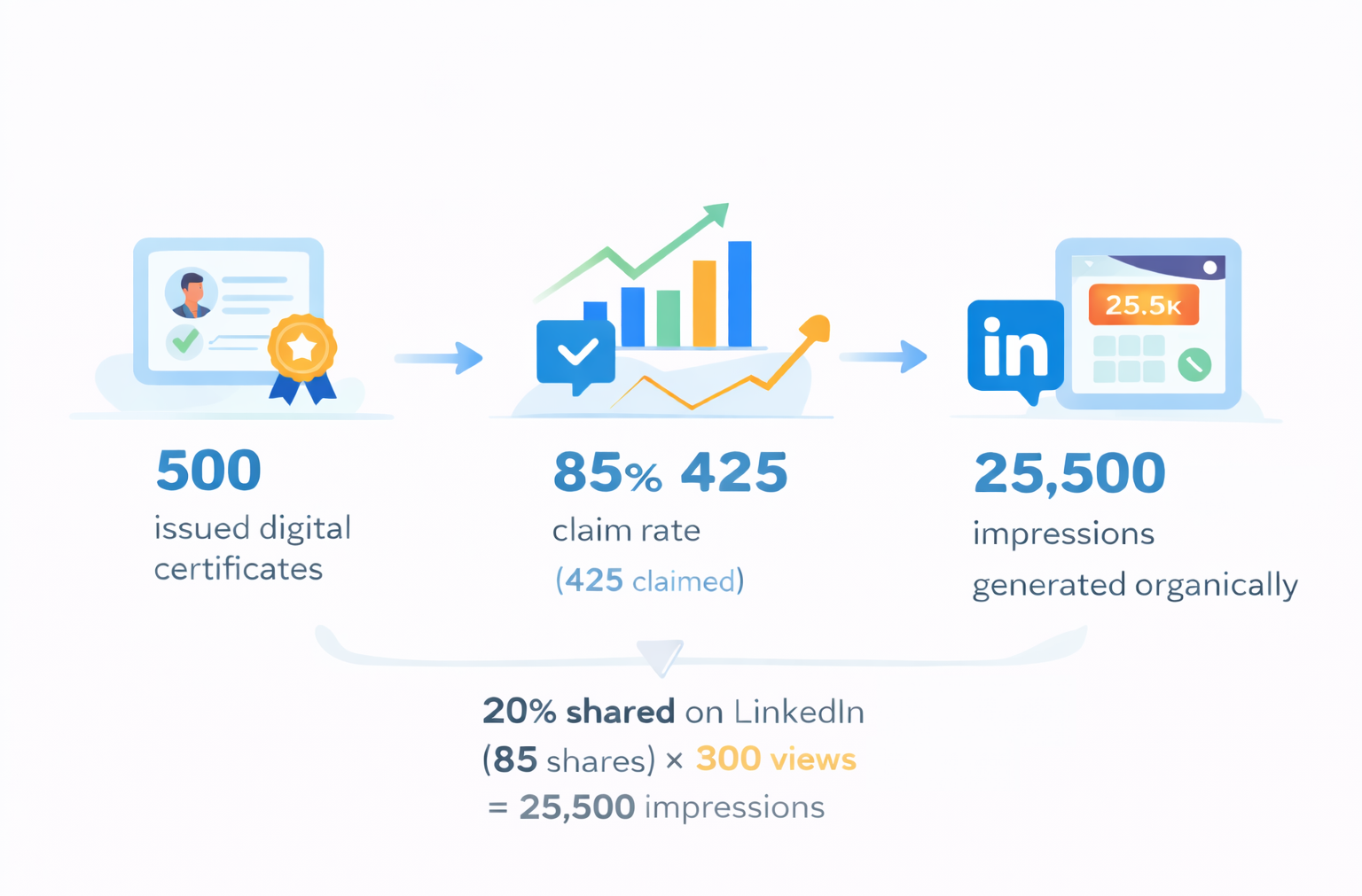
The return on investment shows up on several levels. Automated issuance processes reduce the time required per certificate from minutes to seconds, which adds up to significant staff hours for large graduating classes. This time saving can be compared directly with the cost of a manual process, making the business case tangible for many administrations. When graduates also share their certificates on LinkedIn, the university's visibility grows organically, without any additional marketing budget. The following example shows the potential reach:
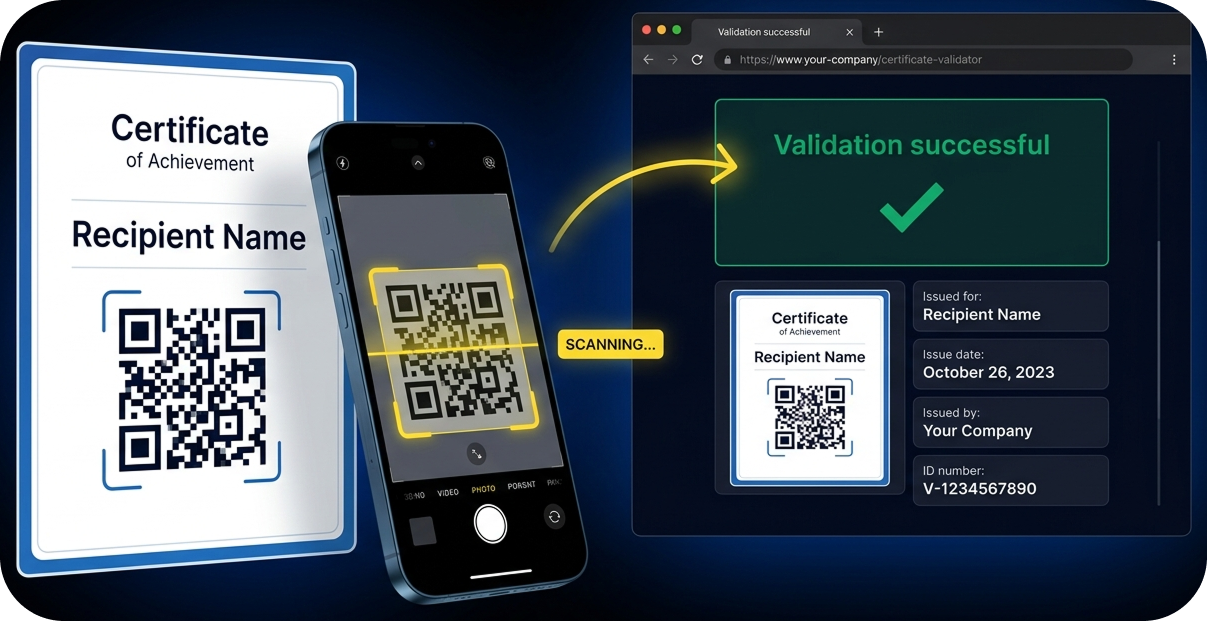
At the same time, digital verification significantly improves protection against forgery. Every certificate issued through Virtualbadge.io carries a cryptographic signature and a unique QR code, allowing employers to verify its authenticity online within seconds.
Legally, digital credentials increasingly rely on European standards. With the European Digital Credentials for Learning, the European Commission has created a format that gives electronically sealed certificates the same legal standing as a paper document across Europe.
For most universities, switching to digital certificates pays off within the first year, through saved material costs, less administrative work, and a significantly lower risk of fraud. With the right pricing plan, costs grow exactly in step with your issuance numbers, giving you predictable, transparent expenses from the start instead of hidden follow-up costs.
See for yourself how easy implementation can be. Book a free demo and find out how your university can benefit from digital certificates.
How long does it take to implement a digital certificate platform?With Virtualbadge.io, the first certificates can often be issued within a few hours, with no coding skills required.
Are digital certificates legally recognized?Yes. Under the eIDAS Regulation, digital certificates with a qualified electronic signature have the same legal standing as a signed paper document.
How can employers verify the authenticity of a certificate?Using the QR code or a unique URL, employers are taken directly to the validation page with all the relevant information about the certificate.
What happens if a certificate needs to be revoked?Issuers can revoke certificates at any time or give them an expiration date, for example if a degree is rescinded. The status is updated immediately on the validation page, so no one unintentionally represents themselves with an invalid credential.
* You can find the organisation ID in the URL when you access your LinkedIn Company page as an admin.


Marketing

Aug 5, 2026

5 min
A note on how we write: we use AI tools to help with research and drafting. Every article is then reviewed, edited and fact-checked by someone on the Virtualbadge.io team before it goes live. The final word is always human.

Use Virtualbadge.io to design and send digital certificates that create trust - in less than 10 minutes.
%20(1).svg)