No user accounts required for your recipients -
Start your 7-day free trial now!

How Organizations Automate the Creation, Delivery, and Verification of Certificates in One System


Paper certificates were long considered the standard for proving qualifications. But in 2026, education providers and businesses face new challenges: certificate fraud is on the rise, manual processes cost time, and global job markets demand credentials that can be verified instantly. A digital certification platform brings the creation, delivery, and verification of certificates together in one place, solving exactly these problems.
In this article, you will learn what a digital certification platform is, what features it offers, and what those responsible for certification and accreditation should look for when choosing one.
A digital certification platform is software that helps organizations create, deliver, and verify digital certificates, badges, and diplomas. Unlike manual processes involving PDF files or paper documents, it brings every step together in one central system.
Every issued certificate contains embedded metadata about the issuer, recipient, and award criteria. This structured data makes the credential machine-readable and instantly verifiable by third parties.
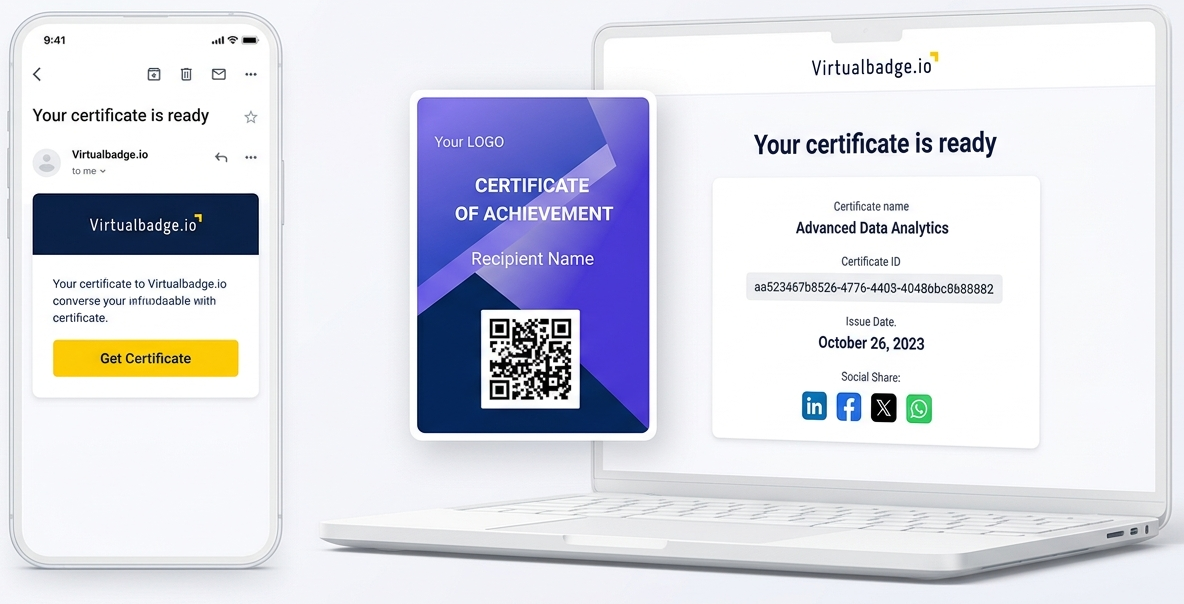
A QR code or verification link leads to a validation page where employers or other institutions can confirm its authenticity.
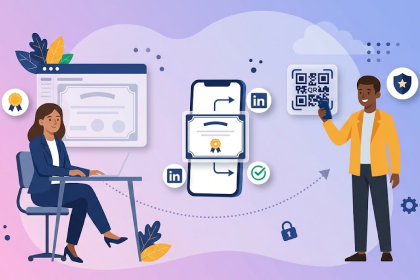
The process generally follows three steps:
When choosing a platform, it is worth looking at the following criteria:
Virtualbadge.io stores all data in a GDPR-compliant manner and gives recipients full control over their credentials. Especially in regulated industries with specific requirements for record-keeping, it is worth taking a closer look at the relevant compliance requirements in advance.
For more information, read: Digital Certificates in Regulated Industries: What to Watch Out For
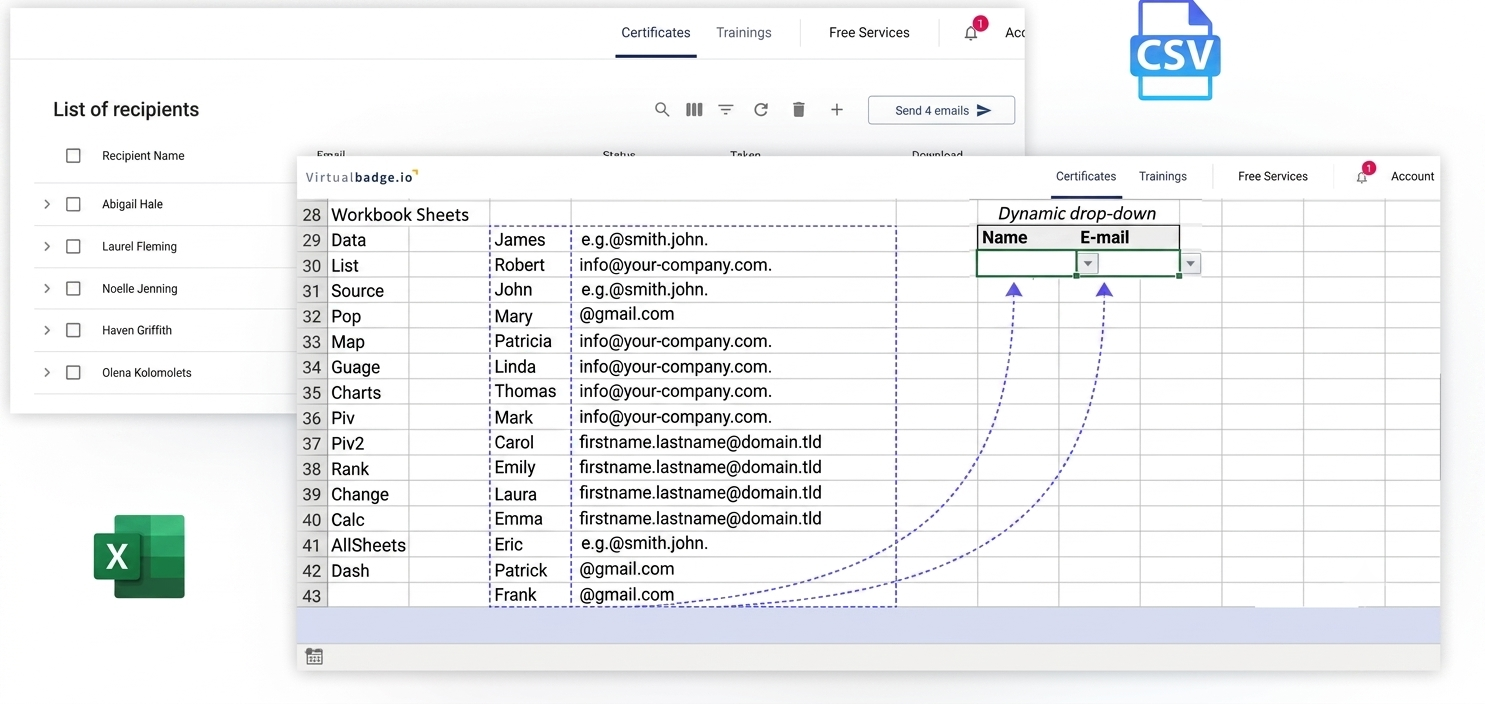
Integration with learning management systems eliminates manual intermediate steps: after a passed exam or course completion, the system automatically sends the performance data to the certification platform, which creates the certificate with all metadata and delivers it by email. Virtualbadge.io supports this through, among other things, Zapier as well as a REST API, so existing workflows remain in place.
IMN Training reduced the time required for certificate issuance after on-site training from 60 to 10 minutes by automating the workflow with Virtualbadge.io. Read the success story.
Recipients also benefit from easy shareability:
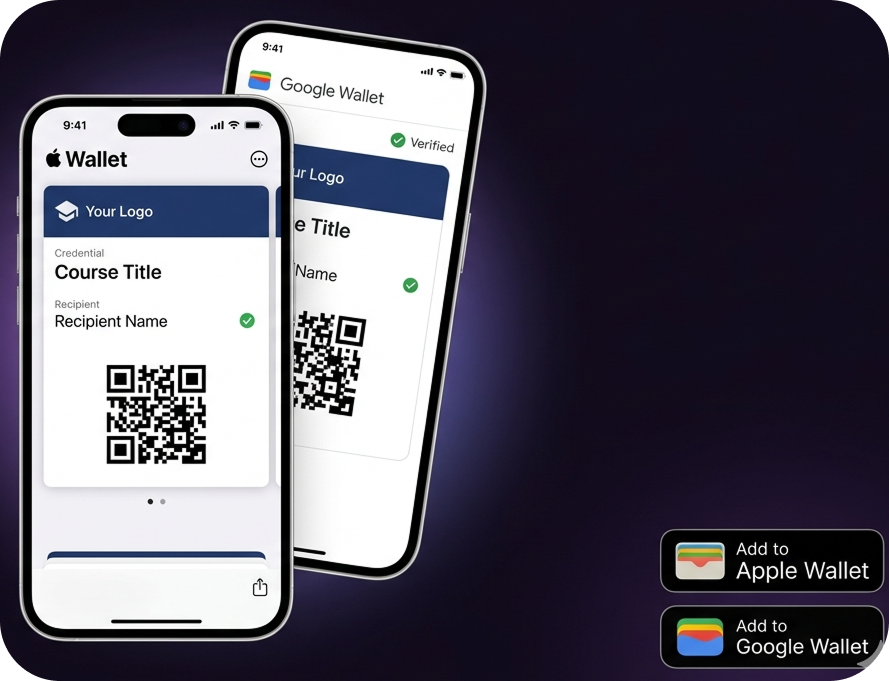
Compared to manual issuance with PDFs or paper, this approach, as the example shows, saves a large share of the previous processing time, while giving recipients greater visibility.
Digital certification platforms have evolved from a niche solution into the standard for education providers and corporate training programs.
For those responsible for certification and accreditation, making the switch pays off: less administrative effort, higher security, and more satisfied recipients.
Virtualbadge.io offers a GDPR-compliant, scalable solution that integrates with your existing systems. Schedule a free demo now and experience how simple verifiable certificates can be.
Are digital badges legally equivalent to paper certificates?
In many areas, digital badges are already recognized as official proof of qualification. In Germany, for example, first aid certificates and language exam certificates are already issued digitally. In regulated industries, however, it is still worth reviewing the relevant compliance requirements beforehand.
Can recipients access their certificates without a user account?
Yes, with Virtualbadge.io, recipients receive a direct link to their certificate by email. They can download it, share it, and add it to their wallet without having to register.
* You can find the organisation ID in the URL when you access your LinkedIn Company page as an admin.


Marketing

Sep 8, 2026

5 min
A note on how we write: we use AI tools to help with research and drafting. Every article is then reviewed, edited and fact-checked by someone on the Virtualbadge.io team before it goes live. The final word is always human.

Use Virtualbadge.io to design and send digital certificates that create trust - in less than 10 minutes.
%20(1).svg)